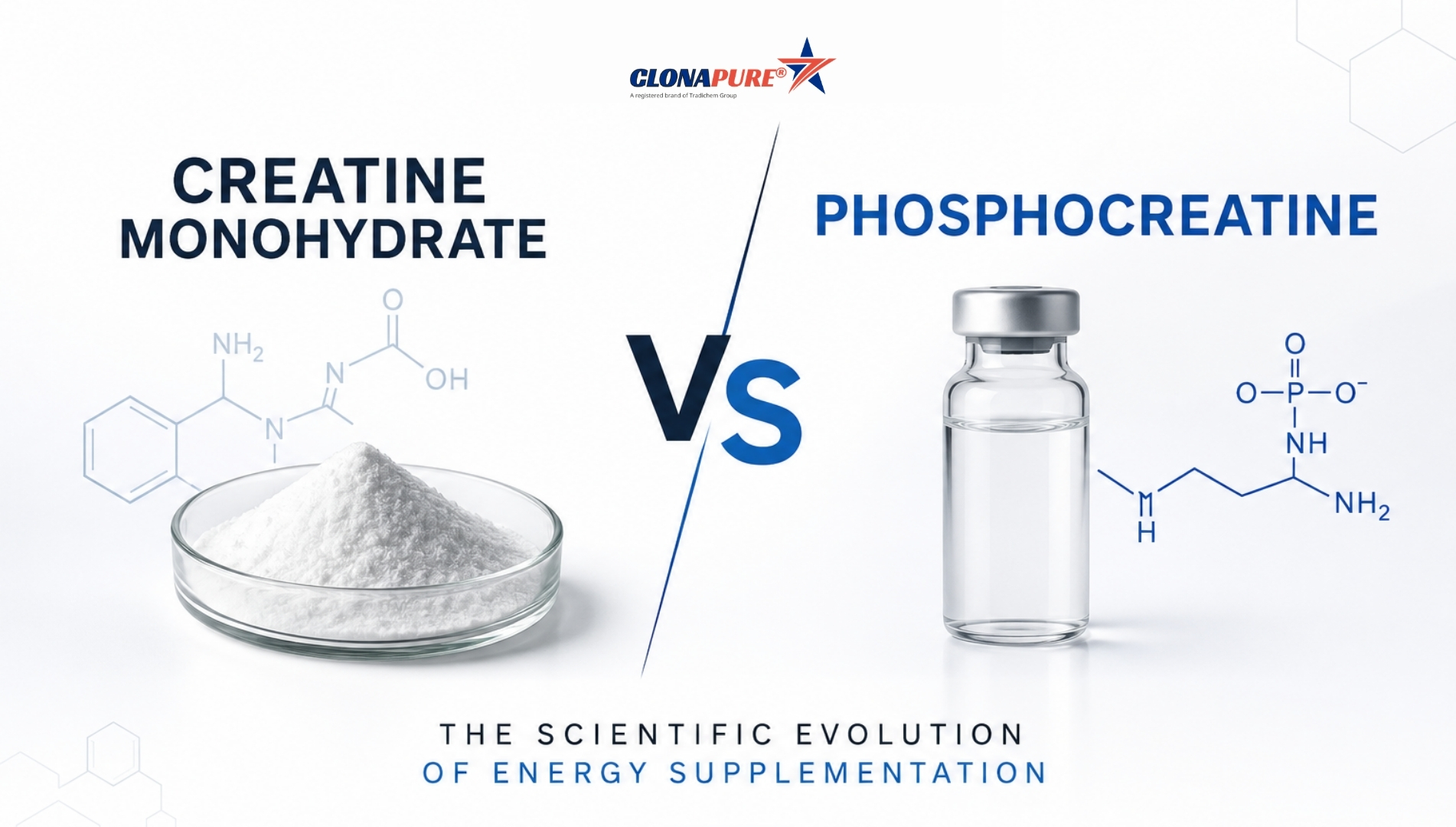
Many consumers frequently ask themselves the same question: are all energy supplements essentially the same? To answer this, we need to look into the molecular debate of creatine monohydrate vs phosphocreatine to understand why standard formulas are no longer the ultimate benchmark for modern performance.
When it comes to nutritional supplements with a wealth of clinical science backing them, traditional creatine is undoubtedly at the top of the list. For decades, active individuals have relied on it to boost physical output. However, as biotechnology advances, the way we understand and consume this vital molecule has undergone a massive transformation.
The limitations of traditional formulas
To understand the evolution of supplementation, we must look at how the body processes standard options. Traditional creatine monohydrate is a raw material that cannot be utilised by your cells immediately. Once consumed, your body must internally convert it into a different molecule before it can start recycling Adenosine Triphosphate (ATP), the primary energy source for muscles, brain, and other energy-demanding organs.
Because this internal conversion takes time, standard monohydrate requires a strict «loading phase». Consumers typically have to ingest high doses for roughly 20 days just to saturate their cellular stores. Furthermore, traditional powders are often plagued by issues regarding poor solubility, seasonal supply chain disruptions, and an uncomfortable tendency to cause extracellular water retention and bloating.
Bypassing the loading phase: the active difference
This is precisely where the scientific distinction between creatine monohydrate vs phosphocreatine becomes a game-changer for your daily routine. Phosphocreatine is the actual active form of creatine that your cells drastically need during times of physical exertion or mental fatigue.
Clonapure represents the next generation of this science. Rather than forcing your body to waste time and metabolic energy converting raw materials, it delivers an innovative, premium trimolecular complex that includes pre-converted, active phosphocreatine combined with essential phosphate salts.
By supplying the exact chemical structure your body requires, it completely eliminates the need for a loading phase. It bypasses traditional digestive delays and begins working at a cellular level from the very first dose.
Creatine monohydrate vs phosphocreatine: a direct comparison
To help you make an informed choice for your health and lifestyle, let us break down how these two options compare across key criteria:
- Bioavailability and Speed: Standard monohydrate requires weeks of consistent consumption to accumulate in your system. Clonapure provides direct, active phosphocreatine for immediate ATP recycling from day one.
- Synergistic Action: Traditional supplements rely on a single, isolated molecule. Clonapure’s unique trimolecular structure creates a triple synergetic action that significantly improves cellular stability and absorption.
- Purity and Manufacturing: While lower-grade options often have ambiguous origins, Clonapure is produced in a pharmaceutical-grade, certified GMP facility in Spain, guaranteeing total safety, 100% anti-doping compliance, and WADA certification.
- No Fluid Retention: Traditional alternatives can lead to temporary, non-muscular weight gain due to water holding. Clonapure’s precise absorption profiles offer clean, real cellular energy without unnecessary fluid retention.
Why settle for good when you can have the best?
The transition from standard monohydrate to a trimolecular complex is not just a minor upgrade; it is a profound scientific leap forward. It moves supplementation out of the old-school fitness paradigms and into a premium space of universal, 360-degree performance for your body and mind.
If you are looking for a clean, stable, and highly effective source of energy that respects your time and works instantly, the choice between traditional options is clear. Why settle for good when you can have the best?